Data last verified: May 2026
Secured vs Unsecured Loans: Key Differences Explained
Understand the key differences between secured and unsecured loans in India. Compare interest rates, eligibility, risks, and find which loan type suits your needs.
Ranveer Patel is a finance professional and founder of AbacusHand. She specialises in EMI & loan planning, income tax under old and new regimes, and SIP investment analysis for Indian households. Every calculator and article on AbacusHand is personally reviewed by her for accuracy.
When you apply for a loan in India, one of the first decisions you face is choosing between a secured and an unsecured loan. This choice affects everything — from the interest rate you pay to the risk you carry. Secured loans like home loans and car loans require collateral, while unsecured loans like personal loans and credit cards rely solely on your creditworthiness. Understanding these differences can save you lakhs in interest and help you pick the right financing option for your specific needs.
What is a Secured Loan?
A secured loan is backed by an asset (collateral) that the lender can seize if you default on repayment. The collateral reduces the lender's risk, which is why secured loans come with lower interest rates. In India, common secured loans include home loans (property as collateral), car loans (vehicle as collateral), loan against property (LAP), loan against fixed deposits, and gold loans. Banks like SBI, HDFC, and ICICI offer home loans starting at 8.25% p.a. precisely because the property serves as security.
What is an Unsecured Loan?
An unsecured loan requires no collateral — the lender approves it based on your income, credit score, employment history, and repayment capacity. Since there's no asset backing the loan, lenders charge higher interest rates to compensate for the increased risk. Personal loans, credit card debt, education loans (in most cases), and business loans for small amounts are common unsecured loans in India. Interest rates typically range from 10.5% to 24% depending on your CIBIL score and profile.
Key Differences: Secured vs Unsecured Loans
Here's a comprehensive comparison of secured and unsecured loans across important parameters:
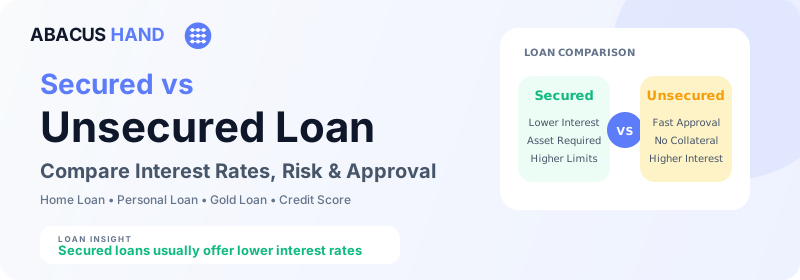
- Interest Rate: Secured loans offer 8-12% p.a. while unsecured loans charge 10.5-24% p.a.
- Collateral: Secured loans require property, vehicle, FD, or gold; unsecured loans need no asset
- Loan Amount: Secured loans offer higher amounts (up to ₹5-10 crore for home loans); unsecured loans cap at ₹25-40 lakh typically
- Tenure: Secured loans allow up to 30 years (home loan); unsecured loans max at 5-7 years
- Processing Time: Secured loans take 7-15 days due to property verification; unsecured loans can be disbursed in 24-72 hours
- Risk to Borrower: Secured loans risk asset seizure on default; unsecured loans lead to legal action and credit damage
- Eligibility: Secured loans have flexible CIBIL requirements (650+); unsecured loans typically need 700+ CIBIL score
- Tax Benefits: Home loans offer Section 80C and 24(b) deductions; most unsecured loans have no tax benefits
Interest Rate Comparison: Real Numbers
The interest rate gap between secured and unsecured loans is significant. As of FY2025-26, SBI offers home loans at 8.25-9.65% p.a., while SBI personal loans start at 11.15% p.a. HDFC Bank's car loan rates begin at 8.70% p.a., but their personal loan rates start at 10.75%. On a ₹10 lakh loan for 5 years, the difference between 9% (secured) and 14% (unsecured) means paying ₹1.45 lakh more in total interest with the unsecured option. For larger amounts and longer tenures, this gap widens dramatically. Check your potential monthly outflows using our personal loan calculator.
Always compare the total cost of borrowing (principal + total interest) rather than just the EMI amount. A lower EMI with longer tenure can actually cost you more overall due to accumulated interest.
When to Choose a Secured Loan
Secured loans are ideal when you need a large amount (above ₹5-10 lakh), want the lowest possible interest rate, need a longer repayment tenure, or are purchasing an asset like a home or car. They're also better if your CIBIL score is between 650-700, as lenders are more flexible with secured lending. A home loan at 8.5% for 20 years on ₹50 lakh results in an EMI of ₹43,391 with total interest of ₹54.14 lakh. The same amount as a personal loan at 12% for 5 years would mean an EMI of ₹1,11,220 — often unaffordable.
When to Choose an Unsecured Loan
Unsecured loans work best for smaller amounts (₹1-5 lakh), emergency funding needs, short-term requirements, or when you don't have assets to pledge. They're perfect for medical emergencies, wedding expenses, travel, or debt consolidation. The quick disbursement (often within 24 hours from apps like Bajaj Finserv, KreditBee, or bank apps) makes them ideal for urgent needs. If your CIBIL score is 750+, you can negotiate rates as low as 10.5% on personal loans.
Risk Assessment: What Happens on Default
With secured loans, defaulting means the lender can invoke the SARFAESI Act (for banks) and auction your property after giving 60 days notice. For car loans, the vehicle can be repossessed. However, lenders prefer recovery over seizure and usually offer restructuring options first. With unsecured loans, the lender cannot seize assets directly but can file a civil suit, engage recovery agents, report to CIBIL (destroying your score), and in extreme cases, initiate proceedings under Section 138 of the Negotiable Instruments Act for bounced cheques.
Under RBI guidelines, banks must follow a fair practices code for recovery. Harassment by recovery agents is illegal. If you face aggressive recovery tactics, complain to the RBI Banking Ombudsman.
Loan Against Property: The Middle Ground
Loan Against Property (LAP) offers an interesting middle ground — you get the low interest rates of a secured loan (8.5-11% p.a.) with the flexibility of using funds for any purpose (business, education, medical, wedding). Banks typically lend 50-70% of the property's market value. So a property worth ₹1 crore can fetch you ₹50-70 lakh at rates much lower than a personal loan. The catch: your property is at risk if you default, and processing takes 10-15 days due to property valuation and legal verification.
Impact on CIBIL Score
Both secured and unsecured loans affect your CIBIL score similarly — timely payments improve it, defaults damage it. However, having a mix of both types (called 'credit mix') actually helps your score. CIBIL rewards borrowers who demonstrate ability to manage different credit types. A person with a home loan, a car loan, and a credit card (all paid on time) will typically have a higher score than someone with only credit cards. The credit mix factor accounts for about 10% of your CIBIL score calculation.
Practical Example: ₹10 Lakh Loan Comparison
Let's compare borrowing ₹10 lakh through different loan types. Personal Loan at 12% for 5 years: EMI ₹22,244, total interest ₹3,34,667. Loan Against Property at 9.5% for 10 years: EMI ₹12,940, total interest ₹5,52,753. Loan Against FD at 7.5% for 3 years: EMI ₹31,106, total interest ₹1,19,808. Gold Loan at 8% for 1 year: EMI ₹86,988, total interest ₹43,854. The choice depends on your repayment capacity, urgency, and available collateral.
Tips for Choosing the Right Loan Type
Follow these guidelines to select the most suitable loan type for your situation:
- Calculate total interest cost, not just EMI — use an free EMI calculator to compare scenarios
- If you have an FD, consider loan against FD (1-2% above FD rate) before personal loan
- For home renovation, a top-up on existing home loan is cheaper than a personal loan
- Check if your employer offers salary advance or employee loans at subsidized rates
- For amounts under ₹2 lakh with 750+ CIBIL, personal loan apps offer competitive rates
- Never pledge your primary residence for non-essential expenses like vacations or weddings
Calculate your EMI for both secured and unsecured loan options to compare total costs
Use EMI CalculatorFrequently Asked Questions
It depends on your needs. Secured loans are better for large amounts (₹5 lakh+) and long tenures due to lower interest rates (8-12%). Unsecured loans are better for smaller amounts, emergencies, and when you need quick disbursement without risking assets. Always compare total interest cost before deciding.
Not directly, but you can take a loan against property (LAP) or loan against FD at lower rates and use it to prepay your high-interest personal loan. This effectively replaces unsecured debt with secured debt at a lower cost. Ensure the savings justify any prepayment charges on the personal loan.
The lender can seize and auction your collateral under the SARFAESI Act after giving 60 days notice. For home loans, the bank can take possession of your property. However, lenders typically offer loan restructuring, moratorium, or settlement options before resorting to asset seizure.
Secured loans have more flexible CIBIL requirements than unsecured loans. Many banks approve home loans with a CIBIL score of 650+, while personal loans typically need 700+. The collateral reduces lender risk, so they're more lenient on credit score requirements for secured lending.