Data last verified: May 2026
Personal Loan vs Credit Card: Which is Cheaper?
Compare personal loans vs credit cards for borrowing money. Understand interest rates, fees, and when each option saves you more money in India.
Ranveer Patel is a finance professional and founder of AbacusHand. She specialises in EMI & loan planning, income tax under old and new regimes, and SIP investment analysis for Indian households. Every calculator and article on AbacusHand is personally reviewed by her for accuracy.
When you need funds urgently — whether for a medical emergency, wedding, home renovation, or debt consolidation — you typically have two options: a personal loan or your credit card. While credit cards offer instant access to funds, personal loans provide larger amounts at lower interest rates. The right choice depends on the amount you need, how quickly you can repay, and the total cost of borrowing. Let's break down both options with real numbers.
Interest Rate Comparison: The Biggest Difference
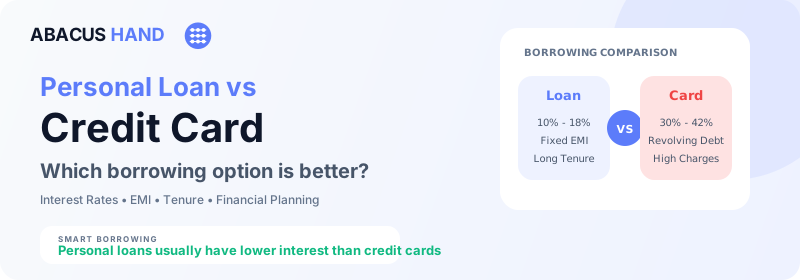
This is where personal loans win decisively. Personal loan interest rates in India range from 10.5% to 24% per annum (reducing balance), depending on your credit score and lender. Credit card interest rates, on the other hand, range from 24% to 42% per annum (2-3.5% per month) on revolving credit. If you carry a ₹1 lakh balance on your credit card for 12 months at 36% annual interest, you'll pay approximately ₹36,000 in interest. The same amount as a personal loan at 12% costs only ₹12,000 in interest — a saving of ₹24,000. Check your potential monthly outflows using our personal loan calculator.
When Credit Cards Are Actually Cheaper
Credit cards can be the better option in these scenarios:
- Interest-free period: If you can repay within 20-50 days (billing cycle), credit cards are completely free
- No-cost EMI offers: Many merchants offer 3-6 month no-cost EMI on credit cards
- Small amounts under ₹50,000: Processing fees on personal loans (1-3%) may exceed credit card interest for short periods
- Reward points: Credit card spending earns 1-5% back in rewards, effectively reducing cost
- Short-term need (1-2 months): If you'll repay quickly, the convenience outweighs the higher rate
When Personal Loans Are Better
Personal loans make more sense when:
- You need ₹1 lakh or more and can't repay within 2-3 months
- Repayment will take 6-60 months (structured EMI is easier to manage)
- You want to consolidate high-interest credit card debt
- You need a fixed repayment schedule for budgeting
- The amount exceeds your credit card limit
- You want to avoid the temptation of minimum payment trap
The Minimum Payment Trap: Credit Card's Hidden Danger
Credit cards require only 5% minimum payment each month, which feels manageable but is financially devastating. If you have a ₹2 lakh outstanding and pay only the minimum (5% or ₹5,000 initially), it takes over 8 years to clear the debt, and you end up paying ₹3.8 lakh in interest — nearly double the original amount. Personal loans, with fixed EMIs and defined tenure, force disciplined repayment and have a clear end date.
If you're currently paying only minimum due on credit cards, consider a personal loan to consolidate that debt. Even at 15% personal loan rate, you'll save significantly compared to 36-42% credit card interest.
Cost Comparison: ₹2 Lakh Borrowing for 12 Months
Total cost comparison for borrowing ₹2,00,000 repaid over 12 months:
- Personal Loan (12% p.a.): EMI ₹17,769 | Total Interest ₹13,228 | Processing Fee ₹4,000 | Total Cost ₹17,228
- Personal Loan (18% p.a.): EMI ₹18,335 | Total Interest ₹20,020 | Processing Fee ₹4,000 | Total Cost ₹24,020
- Credit Card (36% p.a.): Monthly Interest ₹6,000 declining | Total Interest ₹39,600 approx | Total Cost ₹39,600
- Credit Card (42% p.a.): Monthly Interest ₹7,000 declining | Total Interest ₹46,200 approx | Total Cost ₹46,200
- Credit Card EMI (14-18%): If bank offers EMI conversion, cost similar to personal loan plus conversion fee
Credit Card EMI Conversion: The Middle Ground
Most banks now offer EMI conversion on credit card outstanding — converting your balance into fixed monthly installments at 12-18% interest (much lower than revolving credit rates). This combines the convenience of credit cards with personal loan-like interest rates. However, there's usually a processing fee of 1-2% and you lose the credit limit until the EMI is fully paid. Compare the total cost of credit card EMI conversion vs a fresh personal loan before deciding. You can use our free EMI calculator to instantly verify these calculations.
Impact on Your CIBIL Score
Both options affect your credit score differently. High credit card utilization (above 30% of limit) negatively impacts your score even if you pay on time. A personal loan adds to your total debt but shows as an installment loan with regular payments — which CIBIL views favorably. If you're planning a home loan in the next 6-12 months, clearing credit card debt with a personal loan can actually improve your score by reducing utilization ratio.
Processing Time and Documentation
Comparison of convenience factors:
- Credit Card: Instant access (if within limit), no documentation, no approval needed
- Personal Loan (existing bank): 4-24 hours for pre-approved offers, minimal documentation
- Personal Loan (new bank): 2-7 days, requires income proof, bank statements, KYC
- Credit Card Cash Advance: Instant but charges 2.5-3.5% upfront + 36-42% interest from day 1
- Digital Lending Apps: 5-30 minutes but rates can be 18-36% with hidden charges
Never use credit card cash advance (ATM withdrawal) — it charges 2.5-3.5% upfront fee PLUS interest from day 1 (no interest-free period) at 36-42% annually. This is the most expensive way to borrow money.
Flexibility and Prepayment
Credit cards offer more flexibility — you can pay any amount above the minimum due at any time. Personal loans have fixed EMIs, and while most allow prepayment, some charge 2-5% foreclosure fee (especially fixed-rate loans). However, this flexibility of credit cards is a double-edged sword — it enables the minimum payment trap. For disciplined borrowers, credit card flexibility is an advantage. For others, the structured repayment of personal loans prevents debt spiraling.
Tax Benefits
Neither personal loans nor credit card debt offer tax benefits for personal expenses. However, if you use a personal loan for home renovation, the interest may be deductible under Section 24(b) up to ₹30,000 per year. If used for business purposes, interest on both can be claimed as a business expense. For education expenses, an education loan offers Section 80E benefits that neither personal loans nor credit cards provide.
The Verdict: Decision Framework
Quick decision guide based on your situation:
- Need under ₹50,000, can repay in 1-2 months → Credit Card
- No-cost EMI available on purchase → Credit Card
- Need ₹1-10 lakh, repayment over 6-36 months → Personal Loan
- Consolidating existing credit card debt → Personal Loan
- Emergency with no time for loan processing → Credit Card (then convert to EMI)
- Planning major purchase with 3-6 month repayment → Credit Card EMI conversion
- Need funds for business/investment → Personal Loan (structured and cheaper)
Calculate your personal loan EMI and total interest cost
Use Personal Loan CalculatorFrequently Asked Questions
Yes, significantly. Personal loan rates range from 10.5-24% per annum, while credit card revolving interest is 24-42% per annum. For any borrowing you can't repay within the interest-free period (20-50 days), a personal loan is almost always cheaper.
Yes, if your credit card debt is above ₹50,000 and you're paying revolving interest (not clearing full balance monthly). A personal loan at 12-15% to clear credit card debt at 36-42% can save you 50-60% in interest costs. This is called debt consolidation.
Yes, credit card EMI conversion typically charges 12-18% annual interest plus a one-time processing fee of 1-2%. While much cheaper than revolving credit (36-42%), it's comparable to personal loan rates. Compare total costs including all fees before choosing.
High credit card utilization (above 30% of limit) has a more immediate negative impact on your CIBIL score. A personal loan with regular EMI payments is viewed more favorably. However, too many personal loans or missed payments on either will hurt your score significantly.